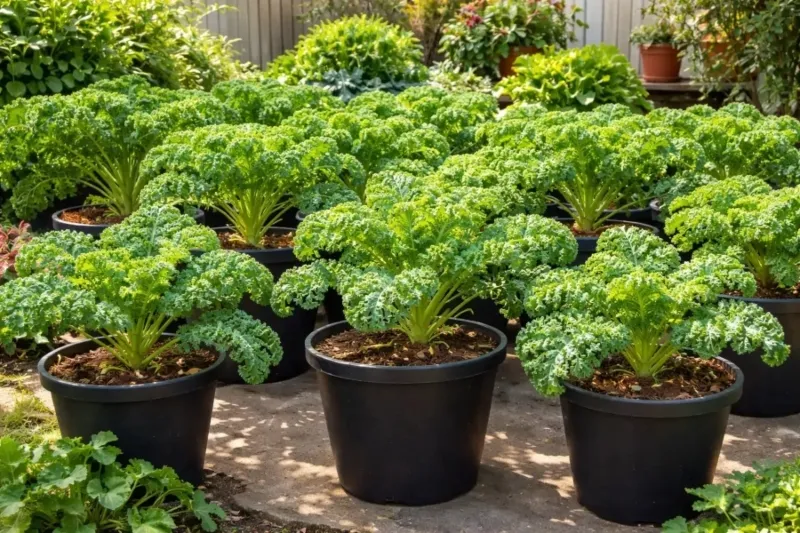
I started to grow kale in pots out of necessity. No spare garden bed. Too many plants. Not enough space. What surprised me was how fast container-grown kale became one of the most reliable vegetables I’ve ever grown. No drama. No fuss. Just leafy greens on demand.
Growing kale in pots gives you control. You decide the soil. You manage the sun. You move the plant when the weather shifts. And kale loves that kind of attention. Whether you’re working with a balcony, patio, terrace, or tiny backyard, container gardening kale fits right in and keeps producing.
This guide pulls together real, tested methods for successfully growing kale in containers. No shortcuts. No gimmicks. Just what actually works.
Can You Grow Kale in a Pot?

Absolutely. Kale grows exceptionally well in pots and containers. In fact, container-grown kale often outperforms garden-grown plants because conditions are easier to control. Less competition. Fewer soil pests. Better airflow.
Kale’s root system is shallow compared to how large the leaves grow, which makes it perfect for container gardening. As long as the pot is deep enough and drains well, kale adapts fast and stays productive for months.
If you’ve ever wondered whether growing kale in pots is worth it, the answer is a confident yes.
Benefits of Growing Kale in Pots and Containers
Growing kale in containers isn’t a compromise. It’s a strategy. One that saves space and delivers consistent harvests.
Container gardening kale is ideal for small spaces. One pot can supply fresh leaves for salads, smoothies, and cooking without taking over your entire outdoor area.
You don’t need raised beds or large plots. A sunny corner is enough.
Pests are easier to manage in containers. You can isolate plants, add netting, and spot problems early. Aphids and cabbage worms are far less intimidating when the plant is right in front of you.
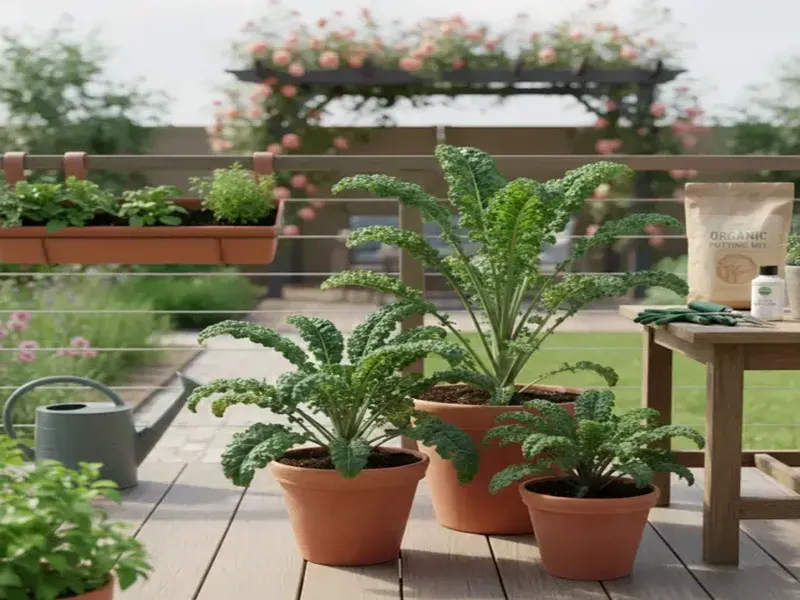
Less spraying. More control. Cleaner leaves.
Potted kale is easier to water, feed, and monitor. No guessing. If the soil feels dry, you water. If growth slows, you feed. Simple.
That ease makes kale in pots perfect for beginners.
Kale is beautiful. Curly leaves. Deep greens. Purple tones. Some varieties look just as good as ornamental plants, especially when grown in containers.
Choosing the Right Container for Kale
The container matters more than most people realize. Get this part right, and the rest falls into place.
Each kale plant needs its own space. I aim for:
- 12 to 18 inches wide
- At least 10 to 12 inches deep
- Roughly a 3 to 5-gallon container

Fabric grow bags work great, but plastic, ceramic, or terracotta pots are fine too.
Drainage is critical. Kale hates soggy soil. Always use pots with drainage holes and never let water pool at the base.
Healthy roots mean steady leafy growth.
Best Soil and Potting Mix for Kale in Pots
Kale loves rich, loose soil. Not heavy. Not compacted. Just fertile and breathable.
Use a high-quality organic potting mix and blend in compost. This improves nutrient availability and moisture retention without sacrificing drainage.
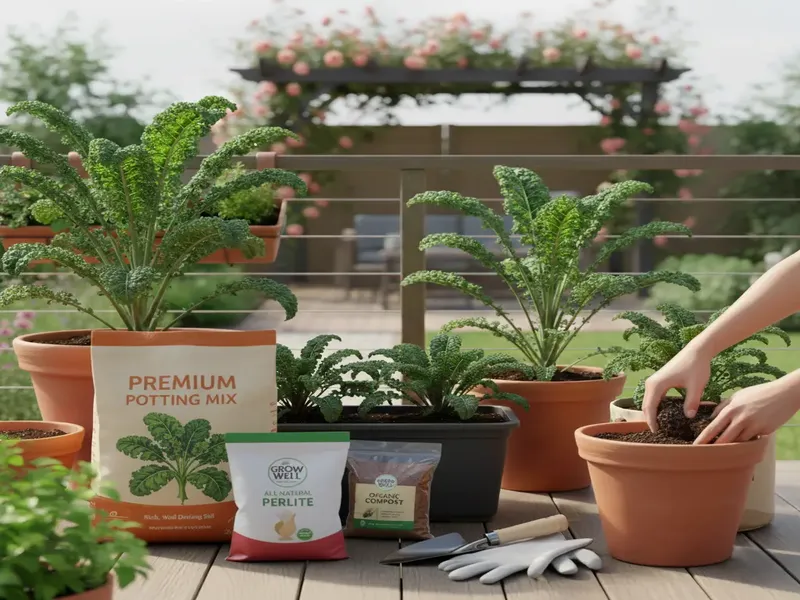
Aim for slightly acidic to neutral soil with a pH between 6.0 and 6.8. Avoid garden soil in containers. It compacts too easily and restricts roots.
When to Plant Kale in Containers
Timing makes a huge difference when growing kale in pots. Kale prefers cool weather and rewards you for planting at the right moment.
Kale grows best in:
- Early spring
- Fall
- Mild winter climates

Ideal temperatures for kale growing are between 55°F and 75°F. Once heat builds, kale bolts and turns bitter. Containers help because you can move them into shade when needed.
How to Grow Kale in Pots
There are two reliable ways to start kale in containers. Both work well.
Growing Kale from Seed
Growing kale from seed is affordable and satisfying. Seeds germinate quickly, and baby leaves appear within weeks.
Sow seeds lightly, cover with a thin layer of soil, and keep moist. Thin seedlings early so each plant has room to grow.

Transplanting Kale Seedlings into Containers
Nursery seedlings give you a head start. Transplant gently, plant at the same depth, and water thoroughly.
Give new transplants a few days of shade to help them acclimate.
Where to Place Kale Containers
Placement controls growth speed, flavor, and longevity.
Sunlight Requirements for Kale
Kale prefers 6 to 8 hours of sunlight per day. Morning sun is ideal. It encourages strong growth without overheating the plant.
Too little sun slows growth. Too much heat causes stress.

Managing Heat and Shade in Warm Weather
In warm climates, afternoon shade is essential. I move my kale pots when temperatures rise, and that simple step extends the harvest dramatically.
Containers give you flexibility. Use it.
How to Water Kale in Pots
Container-grown kale needs consistent moisture. Pots dry out faster than garden beds, especially in warm weather.

I water deeply whenever the top inch of soil feels dry. In summer, that can mean daily watering. Mulching helps retain moisture and keeps roots cool.
Even watering equals tender, sweet leaves.
Fertilizing Kale for Healthy Leaf Growth
Kale is a leafy green, so nitrogen matters. Compost often provides enough, but container plants use nutrients quickly.
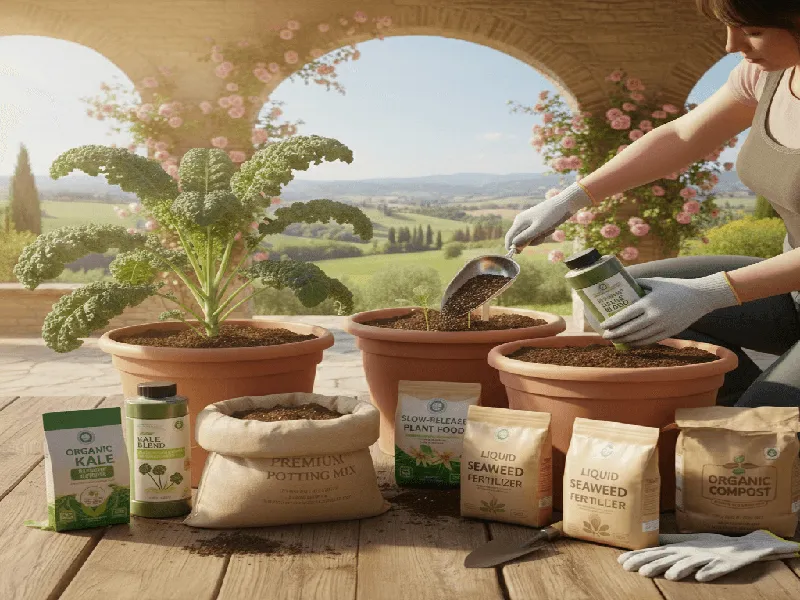
I feed every two weeks with a balanced organic fertilizer or fish emulsion. Yellowing leaves usually signal hunger.
Light, regular feeding keeps kale productive.
Protecting Kale Plants from Pests
Containers reduce pest pressure, but kale still attracts visitors.

Common Kale Pests in Containers
The most common pests include:
- Aphids
- Cabbage worms
- Flea beetles
They show up fast, especially in warm weather.
Organic Pest Control and Netting
I rely on insect netting, hand removal, and companion planting. No chemicals. No residue. Just clean, edible leaves.
Consistency beats spraying every time.
Harvesting Kale for Continuous Growth
Harvesting kale correctly keeps the plant productive for months.
Always harvest outer leaves first. Leave the center intact so the plant continues growing.
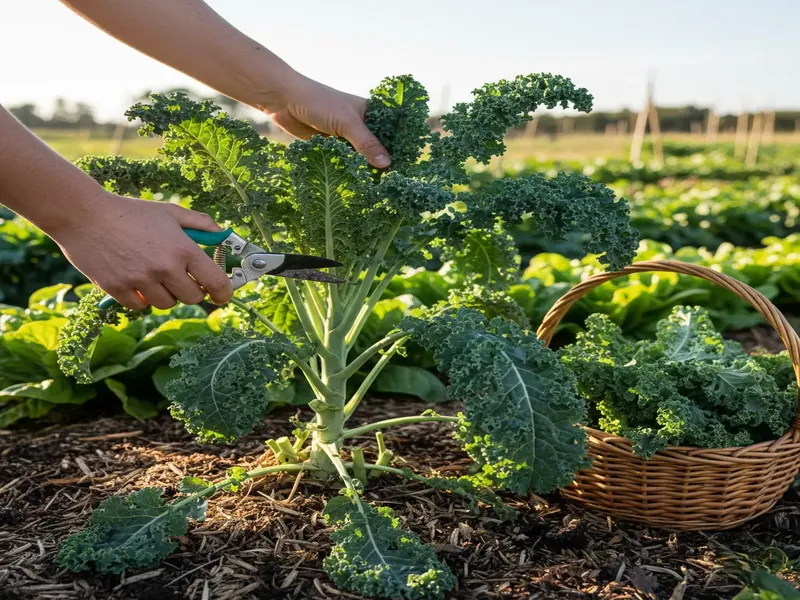
This cut-and-come-again method delivers ongoing harvests from a single plant.
Cool weather improves flavor. After a light frost, kale becomes sweeter and more tender.
Baby leaves are mild. Mature leaves are bold. Both deserve a place in your kitchen.
Best Kale Varieties for Container Gardening
Not all kale varieties behave the same in pots.

Dwarf and Compact Kale Varieties
Best container options include:
- Dwarf Blue Curled kale
- Dwarf Green Curled kale
- Redbor kale
These stay compact and productive.
Curly and Flat-Leaf Kale Types
Curly kale is tough and forgiving. Flat-leaf types like Lacinato kale grow taller and need deeper pots, but deliver excellent flavor.
Choose based on space and taste preference.
How Many Kale Plants Can You Grow in One Pot?
One kale plant per 3 to 5-gallon container is ideal for healthy growth.
Can You Grow Kale on a Balcony or Patio?
Yes. As long as the plant gets enough light, balcony-grown kale thrives.
How Long Does Kale Take to Grow in Containers?
Baby leaves appear in 3 to 4 weeks. Full harvest follows in 6 to 8 weeks.
Why Is My Potted Kale Bolting?
Heat stress is the most common cause. Move containers to shade and water consistently.
Final Thoughts
Growing kale in pots is simple, productive, and flexible. You get fresh, nutrient-rich leaves without needing a traditional garden or perfect soil.
If you want an easy vegetable that thrives in small spaces and keeps giving back, container-grown kale is absolutely worth growing.